
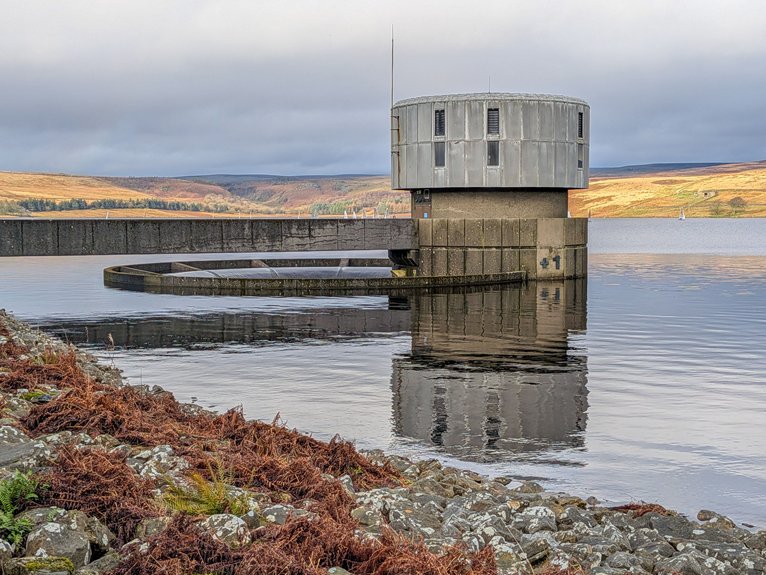
North Carolina reservoir managers are moving beyond static rule curves toward real-time, data-rich operations to protect water quality. Strategies include high-frequency monitoring with profiling buoys, meteorological stations, and cloud-based analytics to guide withdrawal depths and aeration. Watershed-focused nutrient controls—agricultural BMPs, urban green infrastructure, and trading frameworks—reduce nitrogen and phosphorus loads. In-reservoir tools such as hypolimnetic oxygenation, circulation technologies, and targeted treatments further limit harmful algal blooms and hypoxia, with integrated planning aligning these approaches in practice.
Although North Carolina’s reservoirs have historically supported water supply, flood control, and recreation, emerging pressures now expose critical shortcomings in their management frameworks. Legacy operating rules were calibrated for stationary climate patterns, lower development intensity, and simpler regulatory expectations. Today, hydrologic variability, rapid watershed urbanization, and growing multi-sector demands reveal governance and operational gaps. Many facilities still rely on single-objective rule curves, limited sensing networks, and episodic performance review. This constrains adaptive allocation during droughts and high-flow events, increases operational uncertainty, and impedes optimization across interconnected reservoirs. Modern management requires dynamic, data-rich approaches: integrating real-time monitoring, predictive modeling, scenario-based optimization, and coordinated institutional decision-making to align storage, releases, and risk management with evolving regional water-resource objectives. To avoid costly eutrophication, hypoxia, and lake closures, these strategies must also incorporate continuous monitoring of phytoplankton balance and nutrient dynamics to sustain healthy, multi-use reservoir ecosystems.
Multiple interrelated water quality impairments now constrain the performance and resilience of North Carolina reservoirs. These systems increasingly exhibit overlapping stressors that erode ecological function, raise treatment costs, and narrow operational flexibility for utilities and basin managers.
Key challenges include:
How can North Carolina reservoirs be managed effectively without continuous, high‑resolution information on their changing physical, chemical, and biological conditions? Current grab‑sampling regimes miss short‑lived but consequential events such as storm‑driven inflows, hypolimnetic anoxia onset, or cyanobacterial bloom initiation.
Smarter monitoring relies on integrated sensor networks, telemetry, and analytics. Multiparameter sondes mounted on vertical profiling buoys can track temperature, dissolved oxygen, chlorophyll‑a, phycocyanin, turbidity, and conductivity at multiple depths in near real time.
Coupled meteorological stations and inflow gauges enable mass‑balance and mixing diagnostics. Data streams transmitted via cellular or satellite links feed cloud platforms running QA/QC algorithms, anomaly detection, and short‑term forecasting.
These systems support dynamic operating rules—adjusting withdrawal depths, aeration, or mixing—based on data‑driven risk thresholds rather than fixed calendars.
While in-reservoir treatments can mitigate symptoms of eutrophication, durable protection of North Carolina’s drinking water reservoirs depends on reducing nutrient loads at the watershed scale. Advanced watershed models link land use, climate projections, and hydrology to quantify nitrogen and phosphorus delivery, enabling precision targeting of controls to the highest-yield subbasins.
Key watershed-based strategies include:
Together, these tools create measurable, enforceable nutrient caps that protect reservoir integrity.
Rather than passively receiving watershed loads, reservoirs can be actively managed with engineered in-reservoir tools that suppress harmful algal blooms, stabilize stratification, and improve raw water quality for treatment. North Carolina utilities are increasingly deploying hypolimnetic oxygenation and selective withdrawal to maintain oxic bottom waters, limit internal phosphorus loading, and control manganese and iron.
Data from comparable systems show 40–80% reductions in chlorophyll‑a and taste-and-odor events.
Circulation technologies—such as solar-powered mixers and air-lift destratification—disrupt buoyant cyanobacteria, reduce surface scums, and moderate pH swings, while side-stream supersaturation systems can strip dissolved gases and enhance coagulation performance.
Targeted applications of algaecides, hydrogen peroxide, or phosphorus-binding materials (e.g., lanthanum-modified clays) are increasingly guided by high-frequency profiling, fluorescence sensors, and forecasting models to optimize timing, dose, and cost.
Beyond individual treatment technologies, enduring reservoir resilience in North Carolina depends on coordinated planning frameworks, enforceable policies, and shared data systems that align utilities, upstream jurisdictions, and regulators around measurable water quality targets. Effective collaboration operationalizes nutrient caps, flow regimes, and land-use controls based on predictive modeling and continuous monitoring rather than static standards.
Enduring reservoir resilience demands coordinated planning, enforceable policies, and shared, data-driven water quality governance
Key elements include:
Climate change will drive North Carolina reservoir design toward higher flood-storage allowances, larger spillway capacity, dynamic rule curves, sediment-adaptive layouts, resilient intakes, and integration of ensemble climate projections, real-time sensing, and AI-optimized operations to manage extremes, uncertainty, and reliability targets.
Rural communities access SRF loans versus USDA RD grants; juxtaposing debt and subsidy, they blend CWSRF, WIFIA, FEMA BRIC, state resilience funds, performance‑based PPPs, and utility‑scale sensor pilots to finance advanced monitoring, SCADA, and treatment retrofits.
Citizens participate through advisory boards, watershed associations, data-collection volunteer programs, participatory GIS mapping, co-design of pilot projects, collaborative modeling workshops, and citizen science monitoring networks that feed real-time metrics into adaptive management dashboards influencing operational and investment decisions.
Stricter protections often raise capital costs, increasing rates by up to 15%, disproportionately affecting low‑income users. Equity solutions include tiered pricing, lifeline blocks, targeted subsidies, and data-driven siting of green infrastructure to minimize regressive impacts while preserving universal water access.
They partially align with global best practices—source protection zones, nutrient controls, and adaptive monitoring—yet lag in integrated catchment governance, real‑time digital twins, nature‑based buffering at scale, dynamic pricing, and co-optimized hydropower–water quality operations demonstrated in leading international models.
In closing, North Carolina’s reservoirs resemble intricate circuit boards: when each component—watershed nutrient controls, real-time sensors, in-reservoir treatment, and coordinated policy—functions within design tolerances, the whole system remains stable. Data-driven thresholds for chlorophyll‑a, turbidity, and nutrient loading become the wiring diagrams guiding targeted interventions. By aligning quantified performance metrics with adaptive management, stakeholders can convert today’s impaired lakes into resilient, self-monitoring infrastructure for long-term water security and regulatory compliance. For more information on how Clean Flo can improve the health of your lake or pond, visit us online at Clean Flo. You can also check out our video series on our YouTube channel.