
The Government Accountability Office (GAO) has identified hypoxia as the major factor driving the growing risks of HABs across the United States. Hypoxia, or oxygen depletion, sets off a chain reaction of harmful processes that degrade lake ecosystems:
When the entire water column is oxygenated, these harmful processes are reversed, leading to multiple cascading benefits:
To confirm that a lake is fully oxygenated, Clean-Flo uses dissolved oxygen (DO) profiling. This process measures oxygen levels throughout the water column, from the surface to the sediment.
Example Chart:
A before-and-after DO profile illustrates the success of Clean-Flo’s oxygenation systems:
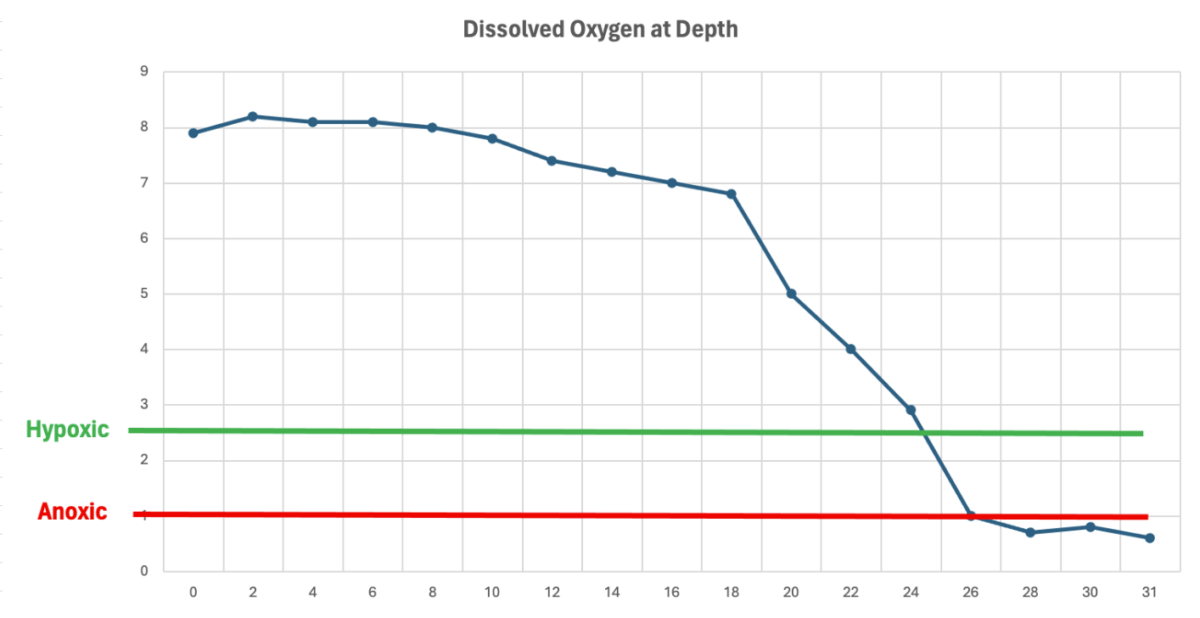
Oxygen levels drop sharply with depth, leaving the bottom layers hypoxic.
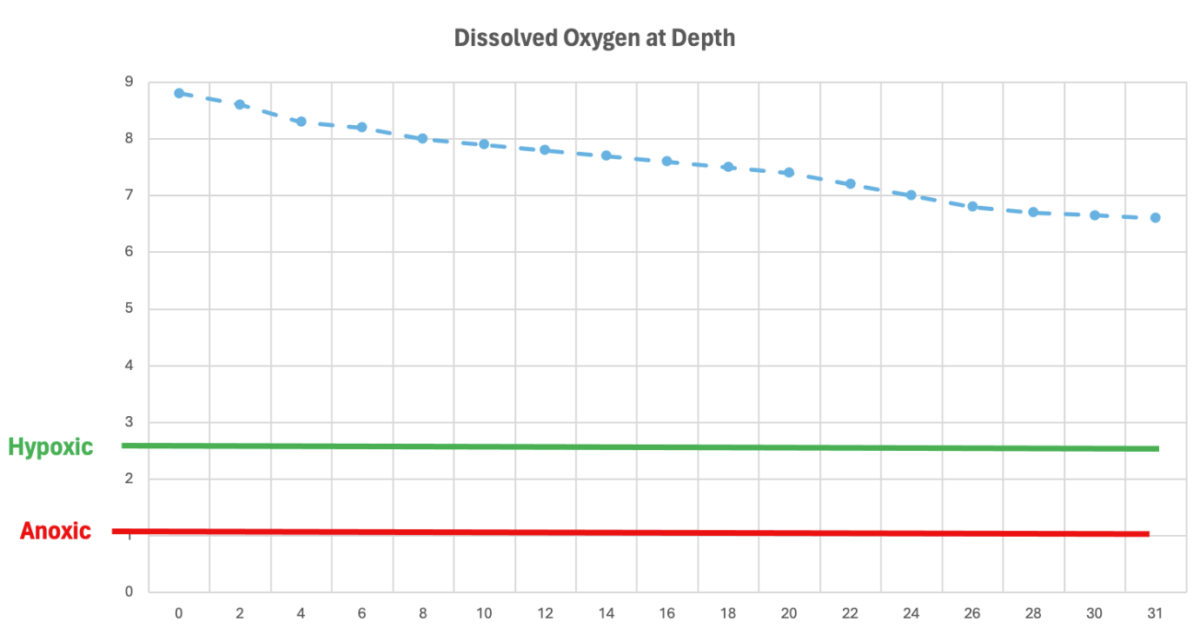
Dissolved oxygen levels are maintained above 5mg/L all the way to the bottom ensuring the water column is hospitable for aquatic life.
These measurements provide clear evidence of effective oxygenation and set the foundation for long-term lake restoration.
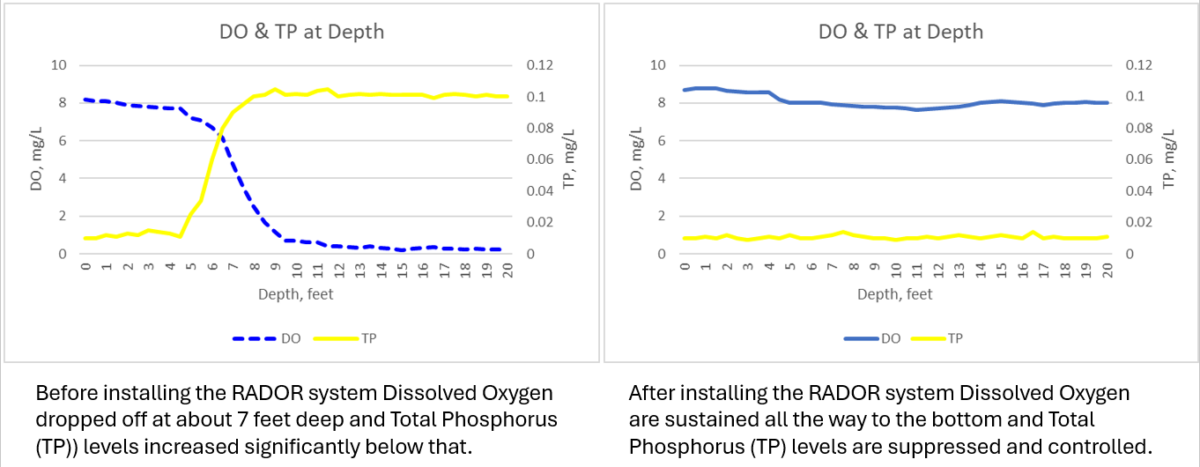
Hypoxia in bottom waters creates conditions where sediments release phosphorus into the water column. This process fuels algal blooms and perpetuates eutrophication. Oxygenation disrupts this cycle in two critical ways:
Phosphorus Availability: In oxygen-rich environments, phosphorus is less soluble, effectively cutting off its availability to cyanobacteria.
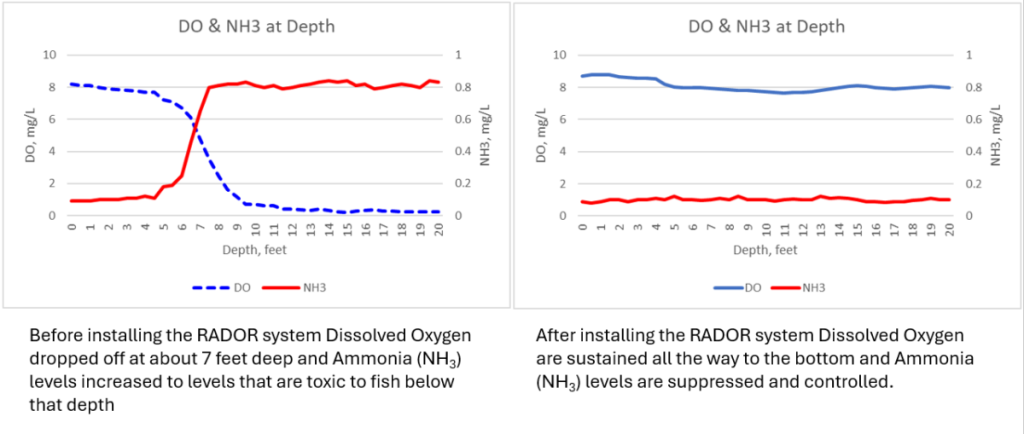
Toxic Byproduct Reduction: Hypoxic sediments release ammonia and hydrogen sulfide, which are harmful to fish and other aquatic organisms. Oxygenation prevents the formation of these byproducts, improving water quality.
Healthy aquatic ecosystems depend on thriving populations of zooplankton and fish, both of which require oxygen to survive and reproduce. Oxygenation benefits these organisms by:
The benefits of oxygenation extend beyond the water. By restoring balance to the aquatic ecosystem, oxygenation enhances the entire food web, which supports land-based wildlife like birds and mammals.
Visual Evidence:
“As an avid birder in the Fort Collins area I can attest to the success that local residents at Warren lake have had in making improvements that attract birds to the lake.
The last two winters in particular, thanks to the (Clean-Flo RADOR) oxygenation system installed in the lake, Warren lake has been a Mecca for rare gulls. Birders from all over Colorado, and surrounding states as well, have visited the area to observe these rare species including Great Black-backed Gull Glaucous-winged Gull, Glaucous Gull, and numerous lesser Black-backed Gulls, Iceland Gulls and Herring Gulls.
In fact Warren Lake was the venue for a field workshop on gull identification that I taught for the Denver Audubon Master Birder class earlier. The local residents and the communities surrounding Warren lake are eager to learn more about birds and other wildlife and make further improvements.
I was invited by the Warren Lake community to speak on the birds of Warren Lake last week and was shocked to find 60 people in attendance. This is a motivated and committed group.”
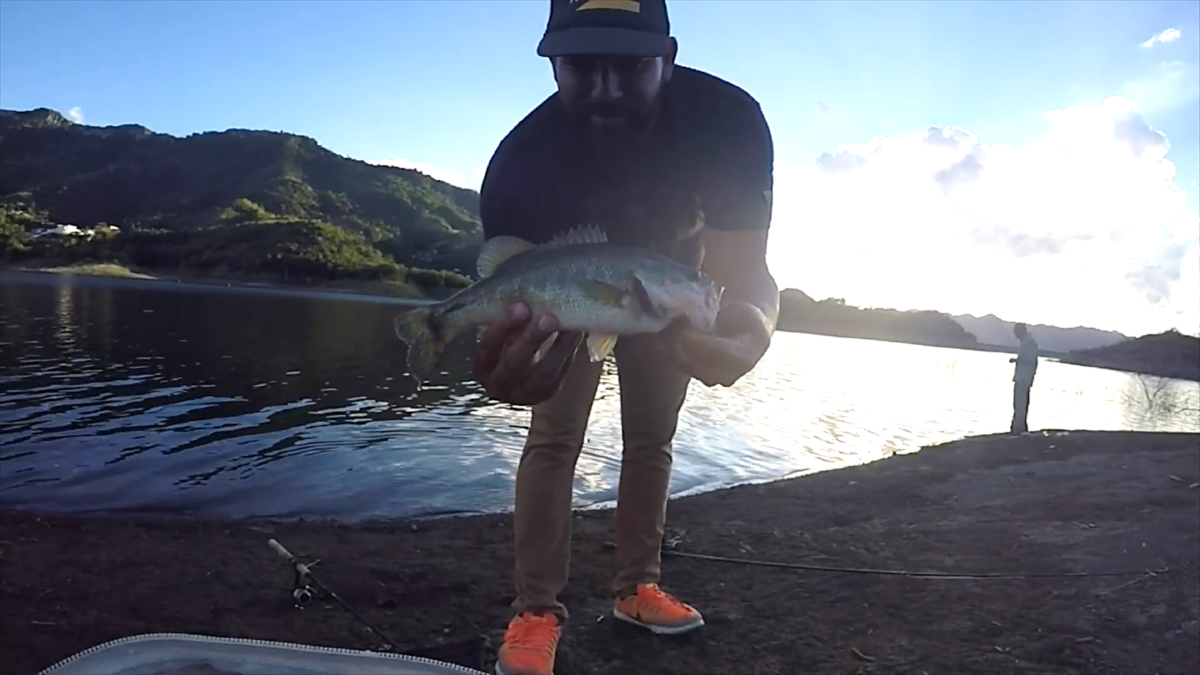
The deterioration of water quality in Toa Vaca reservoir had resulted in frequent fish kills and a significant reduction in the fish life in the dam.
This resulted in a dramatic reduction in birds of prey; there was just a single remaining pair of fish eagles and only 5 pelicans remaining. Fishermen had abandoned Toa Vaca as a site for recreational fishing.
Two years after Clean-Flo began the restoration program there were 5 pairs of fish eagles and 28 pelicans at Toa Vaca, and the fishermen had returned too.
Transforming Lakes with Clean-Flo’s Oxygenation Solutions
Clean-Flo’s oxygenation systems aren’t just a treatment—they’re a comprehensive solution to lake degradation. By restoring oxygen levels throughout the water column, we: