
The Environmental Protection Agency (EPA) defines dissolved oxygen levels below 2.5mg/l as hypoxic, while levels below 1mg/l are considered Anoxic.
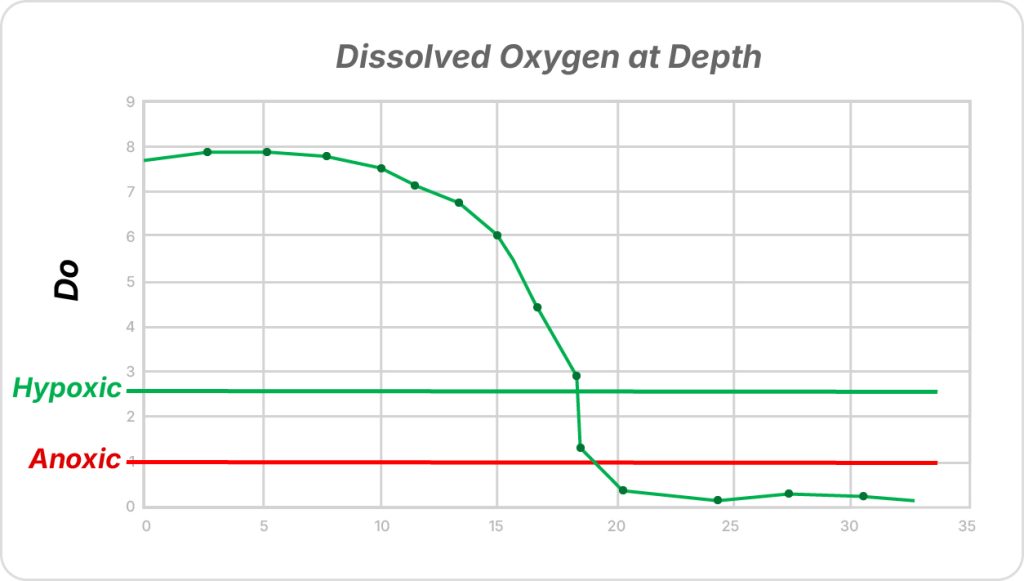
Animals cannot survive in hypoxic conditions. Benthic zooplankton, which live near the sediment and consume organic detritus and decomposing biomass, cannot survive when the sediment is covered by hypoxic water. Losing these organisms at the food web’s base level has cascading effects upon the entire ecosystem. Predators like crustaceans and fish that consume zooplankton and clear biomass and nutrients from the water are starved and have less habitable water volume, further reducing the ecosystem’s nutrient-clearing capacity.
Hypoxia transforms the sediment’s microbiology. Aerobic microbes, (which require oxygen) are replaced by anaerobic microbes. Most pathogenic microbes are anaerobic, and they produce substances like hydrogen sulfide and ammonia that are toxic to fish, further degrading animal life and the food web. Ammonia at the bottom of a lake also strongly favors the proliferation of cyanobacteria, that produce harmful algal blooms (HABs). Research has shown that anaerobic microbes (bacteria and archaea) actively recycle nutrients in a symbiotic relationship with cyanobacteria.
Phosphorus, a key nutrient for algal growth, is more soluble in hypoxic water than in well-oxygenated water so phosphorus levels are greater at the bottom than near the surface. Cyanobacteria can control their buoyancy and dive down to the bottom at night to access this abundant phosphorus, giving them a competitive advantage over floating green algae. This further contributes to the dominance of cyanobacteria and nutrient recycling in the ecosystem.
This allows for the identification of the oxycline, which is the depth at which water becomes hypoxic. Using bathymetric data, we can calculate:
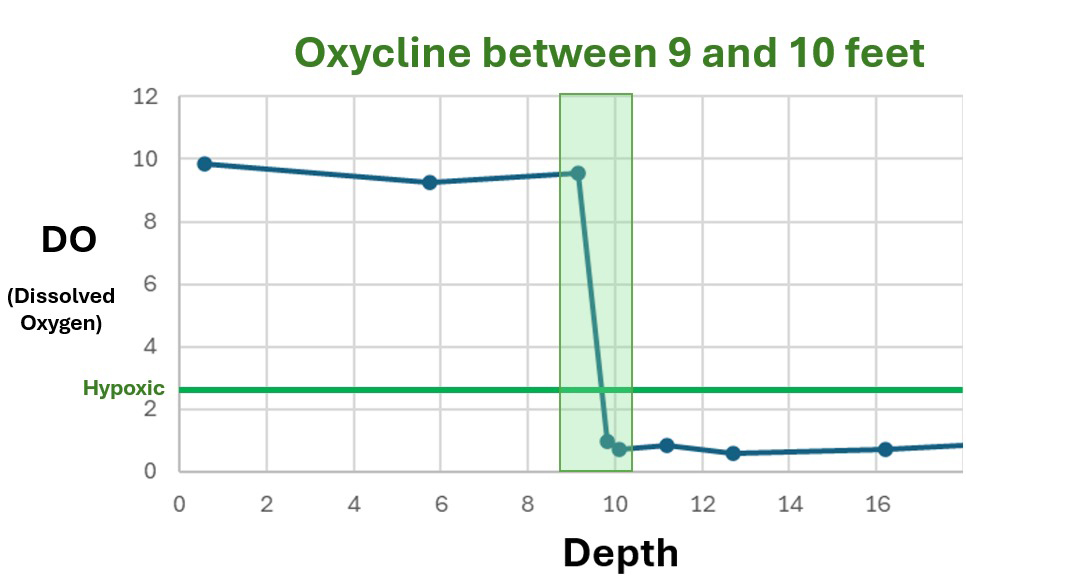
The volume of water that is hypoxic and therefore uninhabitable for animal life.
The surface area of sediment that is hypoxic and therefore unable to support animal life and acts as the main source of nutrient recycling.
Our RADOR systems provide the flexibility to adjust and modify how the system operates in response to oxygenation dynamics seasonally and as the depth profile of the lake changes due to Bio-Dredging.
Detailed measurement and modeling of dissolved oxygen levels throughout the water column, combined with bathymetric analysis, enable us to ensure that a water body is fully oxygenated at all times.
Next – Click here to learn more about Sediment Nutrient Recycling