
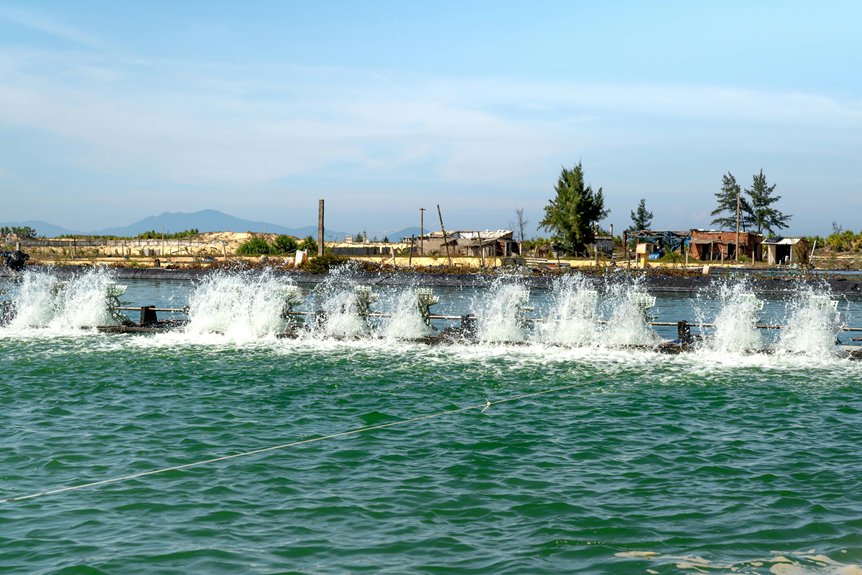
Lake aeration and restoration services in Fort Worth, TX use engineered diffused aeration, circulation, and watershed controls to correct low dissolved oxygen, algae, and sediment-related nutrient recycling. Providers assess bathymetry, thermal stratification, and nutrient loads to design surface or subsurface systems that stabilize water quality and reduce fish kills. Smart controllers, solar options, and ongoing monitoring support energy-efficient, climate-resilient lake management. Further details explain system choices, costs, timelines, and long-term maintenance strategies.
Fort Worth lakes require aeration and restoration due to increasing nutrient loads, thermal stratification, and declining dissolved oxygen levels that accelerate eutrophication and degrade aquatic habitat.
Fort Worth lakes face worsening eutrophication, making proactive aeration and restoration critical to protect aquatic health
Urban stormwater, aging wastewater infrastructure, lawn fertilizers, and sediment-bound phosphorus intensify algal growth, reduce water clarity, and destabilize ecological balance.
Without intervention, these systems exhibit fish kills, invasive plant expansion, taste-and-odor issues, and diminished recreational and aesthetic value.
Climate-driven temperature extremes extend stratification periods, compounding oxygen depletion in deeper zones and mobilizing legacy nutrients from sediments.
Forward-looking stakeholders view targeted aeration and restoration as essential risk management for waterfront assets, regulatory compliance, and long-term ecosystem resilience, positioning Fort Worth to safeguard blue-green infrastructure under increasing development and hydrologic stress.
By integrating aeration with ongoing monitoring of oxygenation levels, local managers can track hypoxia, verify treatment performance, and adapt strategies to sustain long-term lake health and usability.
Addressing these eutrophication pressures, lake aeration restores water quality by mechanically increasing oxygen transfer and improving mixing throughout the water column. Submersed diffusers or surface aerators introduce fine air bubbles or agitation, expanding the air–water interface and enhancing gas exchange. This disrupts stratification, equalizing temperature and dissolved oxygen from surface to bottom.
As oxygen levels stabilize, aerobic bacteria outcompete anaerobic communities, accelerating the breakdown of organic sediments while reducing internal nutrient recycling. Phosphorus bound in the sediments is less likely to be released, suppressing algal biomass and improving water clarity.
Thoughtfully engineered aeration systems integrate compressor sizing, diffuser placement, and runtime controls to optimize energy use, minimize ecological disturbance, and create a resilient, self-reinforcing pathway toward long‑term lake restoration.
Seasonal extremes in North Central Texas create a predictable set of stressors that degrade lake health and accelerate eutrophication. Fort Worth waterbodies experience rapid temperature swings, intense solar radiation, and erratic storm events that intensify nutrient loading and destabilize ecological balance. These conditions create feedback loops that favor nuisance species over native biota and undermine long-term resilience.
Common climate-amplified lake problems include:
Although every lake in North Central Texas responds differently to stress, most Fort Worth restoration projects rely on a defined toolkit of aeration technologies tailored to basin depth, morphology, and water-quality goals.
Surface spray systems, high-efficiency impeller units, and low-profile circulators are deployed to disrupt stratification in shallow and wind-sheltered coves, accelerating gas exchange and guiding floating debris toward collection points.
Subsurface aeration uses shore-based compressors feeding weighted lines and micro-porous diffusers, generating fine bubbles that lift anoxic bottom water and promote vertical mixing with minimal visual footprint.
For highly engineered sites, solar- or grid-powered linear aeration grids, integrated with real-time dissolved oxygen sensors and automated controls, deliver adaptive oxygen dosing while minimizing energy consumption and ecological disturbance.
When Fort Worth stakeholders compare fountain aeration to diffused aeration, the choice hinges on basin geometry, water-quality targets, and aesthetic expectations. Fountain aeration primarily treats upper water layers, adds visual impact, and can provide localized circulation in shallow or moderately deep ponds.
Fountain aeration enhances surface water quality while delivering visual appeal in Fort Worth’s shallow and mid-depth ponds
Diffused aeration delivers oxygen at depth, creating whole-column mixing ideal for stratified or nutrient-loaded reservoirs.
Key decision criteria include:
Selecting between fountain and diffused aeration is only one component of effective lake management. Long-term recovery of impaired waterbodies in Fort Worth typically requires integrated, professional restoration services.
Specialized firms apply diagnostic tools—bathymetric mapping, dissolved oxygen profiling, and nutrient budgeting—to design interventions that address root causes rather than symptoms. Benefits include stabilized dissolved oxygen regimes, suppression of harmful algal blooms, and reduction of internal phosphorus loading through alum treatments or strategic sediment capping.
Professional restoration also improves habitat complexity and water clarity, supporting resilient fisheries and native vegetation. Engineered solutions reduce reliance on herbicides, lower dredging frequency, and protect shoreline infrastructure from erosion.
Data-driven adaptive management guarantees that interventions remain effective under climate variability, urban runoff pressures, and evolving regulatory requirements.
Before any equipment is installed, a professional lake aeration service visit in Fort Worth typically begins with a focused site assessment that verifies system suitability and refines design parameters. Technicians evaluate bathymetry, existing circulation patterns, watershed inputs, and ecological constraints to determine best diffuser layouts and compressor sizing.
Water quality testing often includes dissolved oxygen, temperature stratification, nutrient loading, and clarity.
During the visit, property stakeholders can expect:
A property owner seeking lake aeration in Fort Worth must evaluate providers based on technical competence, ecological track record, and site-specific design capabilities.
An innovative firm will begin with bathymetric mapping, dissolved oxygen profiling, and nutrient diagnostics before recommending equipment.
Providers should demonstrate proficiency with diffused aeration, destratification, and circulation systems sized to the lake’s morphometry and watershed dynamics.
Decision-makers should request case studies for similar Texas water bodies, including pre- and post-project water quality data and algal response.
Preference should be given to companies integrating aeration with watershed best management practices, native plantings, and sediment management strategies.
Finally, a qualified Fort Worth aeration company will use energy-efficient compressors, adaptive control technologies, and data-driven monitoring to minimize ecological disturbance while maximizing restoration outcomes.
Once an appropriate aeration provider has been identified, attention shifts to project budgeting, delivery schedules, and long-term upkeep to guarantee sustained water quality gains.
In Fort Worth, costs typically scale with lake size, bathymetry, energy access, and whether surface, bottom-diffused, or solar-powered systems are specified.
Transparent proposals itemize design, equipment, installation, and commissioning to support data-driven decisions.
Implementation timelines generally range from a few days for small ponds to several weeks for complex, multi-zone lakes requiring permitting and electrical upgrades.
Key maintenance planning considerations include:
Because lake aeration is only one component of a resilient waterbody, Fort Worth property owners benefit most from a thorough, long-term management program that integrates watershed controls, biological balance, and mechanical systems.
Strategic nutrient management should begin upland, with stabilized shorelines, vegetated buffers, and retrofitted stormwater inlets that intercept phosphorus and hydrocarbons before they enter the lake.
Ongoing monitoring—dissolved oxygen profiles, chlorophyll-a, Secchi depth, and nutrient assays—allows data-driven adjustments to aeration runtimes, circulation patterns, and bioaugmentation regimes.
Native littoral plantings and habitat structures help outcompete invasive algae while supporting fisheries.
Property owners increasingly deploy smart controllers, solar-powered circulators, and remote sensors to reduce energy use and anticipate water-quality shifts, ensuring the lake remains ecologically stable and visually marketable over decades.
Yes, lake aeration can enhance property value by improving water clarity, reducing odors, and supporting aquatic ecosystems. Technically driven buyers often view aerated lakes as lower-maintenance, ecologically resilient assets, increasing aesthetic appeal and long-term investment confidence.
Permits are typically required, functioning like a “passport” for underwater infrastructure. Property owners must verify zoning, water-body ownership, and environmental regulations, coordinating with municipal, county, and state agencies to guarantee compliance, ecosystem protection, and future-ready aeration system design.
Aeration directly shapes stocking density, growth potential, and species resilience by stabilizing dissolved oxygen and temperature. It enables higher biomass, supports sensitive or high-value species, reduces stratification-related fish kills, and guides innovative, multi-species management emphasizing ecological balance and long-term water quality.
Yes, aeration systems integrate seamlessly with decorative LED lighting and smart controls; this juxtaposes ecological function with visual design, enabling app-based scheduling, sensor-driven oxygen optimization, energy-efficient operation, remote diagnostics, and adaptive responses to seasonal or event-driven water quality demands.
Lake aeration can be nearly imperceptible to neighbors when engineered correctly; low‑decibel compressors, subsurface diffusers, and discreet shoreline placements minimize noise and visual impact while still delivering enhanced water quality, ecological resilience, and long‑term system efficiency.
In Fort Worth’s warm climate, stratified lakes can lose up to 90% of their dissolved oxygen at depth during summer, leading to fish kills and algae blooms. Professionally designed aeration systems help restore vertical circulation, stabilize water chemistry, and reduce long-term dredging and chemical costs. By pairing properly sized aeration with proactive monitoring and shoreline management, property owners can protect ecological health, enhance aesthetics, and maintain a resilient, low-maintenance lake system for decades. For more information on how Clean Flo can improve the health of your lake or pond, visit us online at Clean Flo. You can also check out our video series on our YouTube channel.