
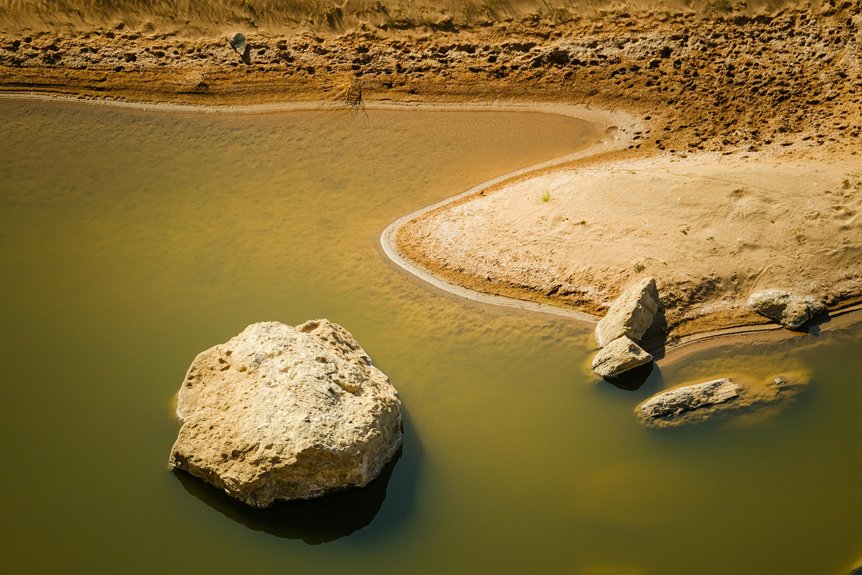
Organic sediment buildup in White Rock Lake degrades water quality by increasing nutrient levels, which promote algae blooms and reduce clarity. This sediment smothers habitats, disrupting aquatic life and decreasing biodiversity. It also causes oxygen depletion during decomposition, threatening fish and other species. Without proper management, sediment can lead to ongoing ecological decline and diminished recreational value. To understand the causes and effective solutions, examine how sediment accumulates and its broader impact on the lake’s health.
Organic sediment accumulates in White Rock Lake primarily through the continuous influx of plant matter, algae, and organic debris carried in by inflowing water and wind. These sediment sources originate from surrounding vegetation, runoff, and atmospheric deposition, actively contributing to sedimentation.
Organic processes, such as the decay of plant material and algae, generate additional organic material that settles within the lake. As inflowing water slows, suspended particles—including organic debris—settle to the bottom, gradually increasing sediment volume.
Wind-driven surface movements also mobilize organic matter, facilitating its deposition in shallow areas. This ongoing cycle of organic input and accumulation underscores the dynamic nature of sediment sources and organic processes, which collectively drive the progressive buildup of organic sediment in White Rock Lake.
As sediment accumulates in White Rock Lake, it directly influences water quality and clarity by introducing a high concentration of decayed plant matter and algae. This organic material fuels nutrient pollution, providing excess nutrients like nitrogen and phosphorus, which promote algae blooms. These blooms reduce water transparency, creating a murky appearance and impairing aquatic health. Nutrient pollution from sediment also accelerates the growth of harmful algae, further degrading water quality. The increased organic load fosters an environment conducive to oxygen depletion as bacteria break down the decayed matter, risking hypoxia. Consequently, water clarity diminishes, making recreational activities less enjoyable and complicating water treatment efforts. Monitoring techniques are essential for assessing sediment buildup and implementing adaptive management strategies.
Sediment buildup in White Rock Lake considerably alters the physical environment that aquatic organisms depend on, leading to potential shifts in species composition and ecosystem health. Increased sedimentation reduces water clarity, promoting algal blooms that deplete oxygen levels and disrupt food webs.
These blooms can outcompete native aquatic plants, impairing fish habitats and decreasing biodiversity. Sediment accumulation also smothers benthic habitats essential for spawning and shelter, further endangering fish populations.
As water quality declines, sensitive species are replaced by more tolerant ones, diminishing ecosystem resilience. The altered environment fosters a less diverse, less stable aquatic community.
Ultimately, sediment buildup creates a feedback loop, intensifying habitat degradation and threatening the long-term sustainability of White Rock Lake’s aquatic ecosystems.
Implementing effective strategies to manage and reduce organic sediment in White Rock Lake requires a combination of targeted interventions and ongoing monitoring. Erosion control measures, such as riprap installation and vegetative buffers, help limit soil runoff that contributes to sediment buildup.
Nutrient management practices, including regulating fertilizer use and reducing stormwater pollutants, directly address nutrient influx that accelerates organic sediment accumulation. Regular sediment assessments and water quality testing enable precise identification of problem areas, allowing for adaptive management.
Combining erosion control with nutrient management not only reduces sediment influx but also minimizes algae blooms that increase organic matter. These strategies require coordinated efforts among local authorities, environmental agencies, and the community to guarantee long-term lake health and sediment reduction.
Addressing sediment buildup is essential to preserving White Rock Lake’s ecological health and recreational value. Pollution sources, such as runoff containing nutrients, chemicals, and organic matter, accelerate sediment accumulation, threatening aquatic ecosystems and water quality.
Without intervention, these pollutants exacerbate organic sediment buildup, impairing habitat and diminishing recreational opportunities. Community involvement plays a vital role in mitigation efforts; local residents and stakeholders can help identify pollution sources and support sustainable practices.
By actively participating in sediment management initiatives, you contribute to maintaining water clarity, reducing pollution, and restoring habitat health. Failing to address sediment buildup risks ongoing degradation, which could lead to costly remediation and diminished lake usability.
Ultimately, proactive engagement and targeted pollution control are crucial to securing White Rock Lake’s future sustainability.
Addressing organic sediment buildup is essential for maintaining White Rock Lake’s ecological health and water quality. Organic sediments, which accumulate from decaying plant matter, algae, and other organic materials, can degrade water clarity and harm aquatic life. By understanding how sediment accumulates and impacts biodiversity, you can better support targeted management strategies. Reducing sediment not only restores clarity but also preserves vital aquatic habitats. Proactive intervention ensures the lake’s sustainability, benefiting both the environment and the community. Ultimately, diligent efforts now will sustain White Rock Lake’s vitality for future generations. For more information on how Clean Flo can improve the health of your lake or pond, visit us online at Clean Flo.