
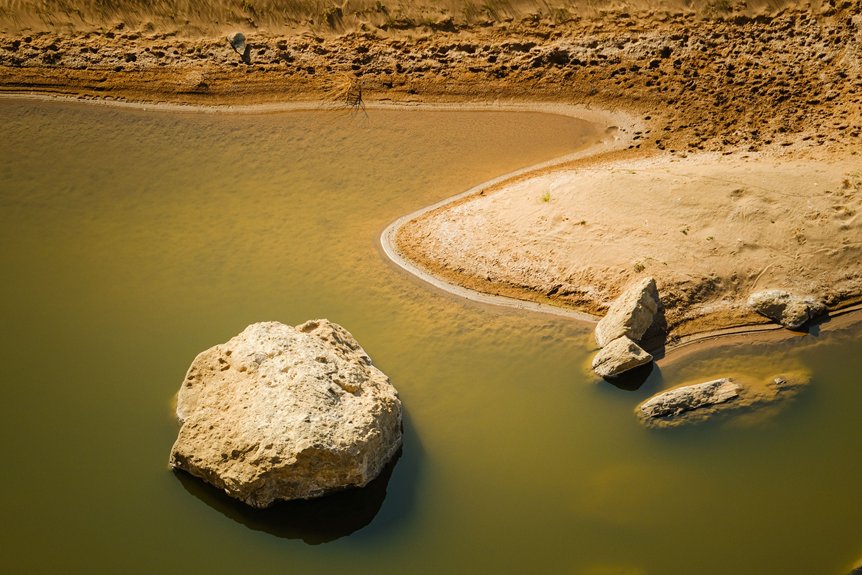
Persistent muck in Pennsylvania lakes is not just “dirt,” but a high‑water (>80%) mix of fine mineral particles, 20–60% decomposed organic matter, and nutrient‑rich floc. Watershed erosion, stormwater runoff, and in‑lake plant and algal decay continually re‑supply this sediment, even after dredging or vacuuming. Short‑term fixes rarely address external loading, so basins rapidly re‑fill within 1–3 seasons. Understanding the full watershed–lake sediment budget clarifies why the problem persists and what solutions actually work.
Although it may appear uniform from the shoreline, the dark, gelatinous muck accumulating on the bottom of many Pennsylvania lakes is a complex mixture of fine mineral particles, decomposed organic matter, nutrients, and often trace contaminants.
Core samples typically reveal stratified layers of silt, clay, and biogenic detritus with water contents exceeding 80%. Loss-on-ignition often shows 20–60% organic fraction, dominated by algal residues and macrophyte fragments.
Core samples expose layered silt, clay, and organic detritus, saturated with water and rich in decomposed plant material
Nutrient assays commonly indicate elevated phosphorus and nitrogen, frequently bound to iron and aluminum oxides.
Trace metals, hydrocarbons, and microplastics occur at variable concentrations, reflecting watershed land use and historical pollutant loading.
This nutrient-rich muck continuously fuels eutrophication and hypoxia, driving recurring algae blooms and oxygen depletion that degrade lake health and recreational use.
Even after dredging or drawdowns remove accumulated deposits, Pennsylvania lakes continue to infill because watershed-driven sediment supply and in‑lake production remain largely unabated. Fluvial inputs mobilized from eroding cropland, construction sites, and legacy channels deliver suspended solids that settle in low-energy lake basins.
Simultaneously, internal loading of organic matter from macrophytes and algae adds biogenic particulates, especially under nutrient-enriched conditions.
Key feedbacks include:
Because chronic sedimentation is ultimately a watershed and whole‑lake process, many commonly marketed “muck removal” products and tactics in Pennsylvania lakes provide only short‑lived, cosmetic change and can exacerbate underlying problems.
Chronic sedimentation is a lake‑wide issue; most “muck removal” quick fixes are cosmetic and short‑lived
Aeration systems, microbial “muck‑eating” additives, and raking or suction-vacuuming typically mobilize fine particles without reducing external loads. Empirical monitoring often shows rapid infilling to pre‑treatment conditions within 1–3 seasons.
Nutrient-rich floc remains resuspended, fueling algal production and internal phosphorus recycling.
Fragmented dredging of shoreline coves reconfigures bathymetry but leaves upstream sediment budgets unchanged, sometimes accelerating delta formation and shifting deposition toward deeper, colder, more sensitive habitats.
Long-term reduction of sediment and organic muck in Pennsylvania lakes requires shifting from in‑lake cosmetic treatments to integrated watershed–lake management guided by measured sediment budgets and performance benchmarks. Effective programs quantify external versus internal loading, then prioritize structural and operational controls delivering verifiable reductions in areal sedimentation rates and organic accumulation.
Key components typically include:
A practical starting point for Pennsylvania lakefront owners involves reducing sediment and nutrient inputs at the parcel scale using proven stormwater and shoreline controls. They can retrofit downspouts with rain gardens, permeable pavers, and bioinfiltration trenches to capture first-flush runoff, which typically carries 70–80% of pollutant loads.
Converting mowed lawn to native vegetative buffers (minimum 25–50 feet deep) measurably reduces bank erosion and phosphorus exports.
Owners can also map micro-drainage pathways with smartphone GIS apps, benchmark clarity using Secchi disks, and coordinate with neighbors to pilot small, data-logged projects that inform larger, watershed-scale sediment strategies.
Muck degrades fish health and fishing quality by reducing dissolved oxygen, smothering spawning substrate, and concentrating nutrients, like a slow suffocating blanket, while promoting algal blooms, benthic anoxia, bioaccumulated toxins, and erratic forage–predator dynamics that undermine resilient sport fisheries.
Yes. Pennsylvania lake managers can leverage DEP Growing Greener, DCNR Community Conservation Partnerships, CFA Watershed Restoration, and Section 319 grants, often combined with municipal stormwater funds, for innovative sediment-removal, dredging, and watershed-source-control projects.
Dredging in Pennsylvania inland lakes pirouettes under Chapter 105 Dam Safety and Waterway Management, Section 404/401 federal permits, DEP GP‑3/GP‑4, NPDES, and Chapter 93 water-quality standards—because sediment apparently needs an interdisciplinary permitting committee.
Climate change will intensify muck buildup by lengthening stratification, elevating water temperatures, and increasing extreme-precipitation nutrient pulses. These shifts accelerate internal phosphorus loading, organic sediment accumulation, algal blooms, and anoxic bottom waters, demanding adaptive, sensor-informed, and watershed-scale sediment management innovations.
Yes. Muck acts like a slow-release fertilizer, feeding cyanobacteria with legacy phosphorus and nitrogen, especially under low-oxygen conditions; this biogeochemical “fuel cell” amplifies harmful algal blooms, microcystin risks, and complicates conventional nutrient-management strategies.
Like a clogged artery quietly rebuilt by every fat-rich meal, a Pennsylvania lake refills with muck particle by particle, each grain a data point in a chronic systems failure. Watershed erosion rates, nutrient loads, and bathymetric surveys all trace the same pattern: without upstream controls and sediment budgeting, dredging is mere cosmetic surgery. Sustainable sediment management becomes the disciplined regimen—diet, exercise, monitoring—that stabilizes the patient, not for a season, but for generations of lakefront stewards.
For more information on how Clean Flo can improve the health of your lake or pond, visit us online at Clean Flo. You can also check out our video series on our YouTube channel.