
Preventing fish kills in Pennsylvania lakes and ponds starts with maintaining dissolved oxygen through profiling and targeted aeration, especially during summer stratification and under ice. Managers should track temperature, DO, nutrients, and chlorophyll-a with routine and high-frequency monitoring to anticipate thermal shocks and harmful algal blooms. Reducing watershed nutrient inputs, managing vegetation thoughtfully, and planning season-specific interventions lowers risk. A structured program integrates early-warning indicators, data-driven aeration control, and rapid response protocols that are outlined next.
Although fish mortality events can appear sudden, most fish kills in Pennsylvania lakes and ponds arise from a few well-documented mechanisms: dissolved oxygen depletion, rapid temperature shifts, harmful algal blooms (especially cyanobacteria), and acute or chronic contamination from nutrients, pesticides, or other pollutants. Managers track stratification dynamics, biochemical oxygen demand, and hypolimnetic oxygen loss to quantify risk. Thermal shocks from storm-driven turnovers or power-plant discharges can exceed tolerance thresholds for stocked trout and coolwater species. Cyanobacteria blooms, fueled by elevated nitrogen and phosphorus, generate toxins and nighttime oxygen crashes. Episodic spills, chronic runoff, and sediment-bound legacy contaminants further compound mortality risk. Proactive management that targets eutrophication and hypoxia through oxygenation and biotechnological lake restoration can significantly reduce the likelihood and severity of these fish kill events.
Recognizing early warning signs in a Pennsylvania lake or pond allows managers to act before the known drivers of fish kills—oxygen depletion, thermal stress, harmful algal blooms, and contaminants—reach lethal thresholds.
Key visual indicators include surface piping or gasping fish at dawn, tight schooling near inlets, and sudden avoidance of deeper strata during heat waves. Managers also watch for abrupt declines in water clarity, floating algal scums with earthy or septic odors, oily or metallic surface films, and filamentous algae choking littoral zones.
Additional red flags are mass crayfish or snail mortalities and waterfowl avoiding historically productive areas.
When visual indicators suggest rising risk, systematic water quality monitoring provides the quantitative resolution needed to prevent fish kills in Pennsylvania lakes and ponds. Managers should implement routine profiling of temperature, dissolved oxygen, pH, conductivity, and turbidity across depth gradients and seasons.
High-frequency sensors and data loggers can capture diurnal swings and stratification patterns that single grab samples miss. Regular nutrient analyses (total phosphorus, nitrate, ammonia) and chlorophyll-a tracking quantify eutrophication pressure.
Standardized sampling intervals, georeferenced stations, and cloud-based data storage enable trend analysis, anomaly detection, and model calibration, supporting predictive management rather than reactive emergency response.
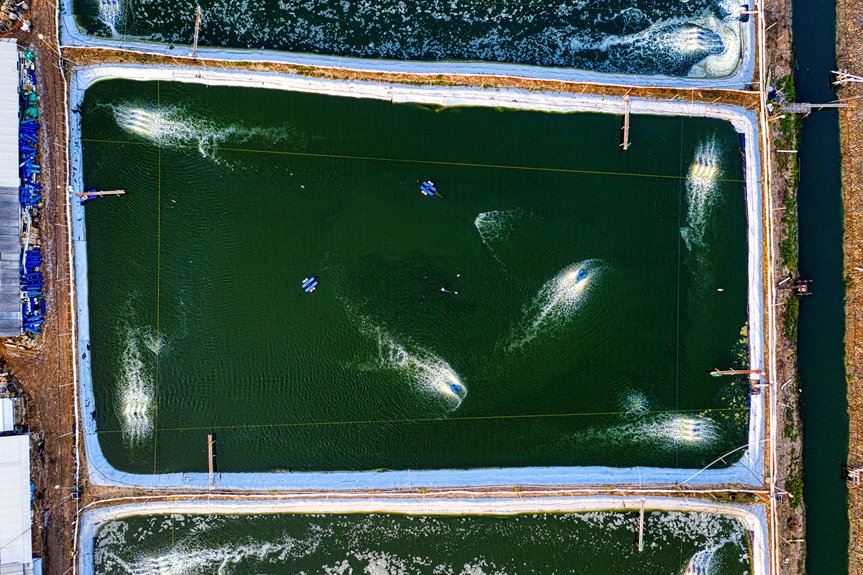
Efficiently maintaining dissolved oxygen (DO) in Pennsylvania lakes and ponds hinges on aeration systems that are engineered to match basin morphology, stratification patterns, and biological oxygen demand.
Efficient DO management in Pennsylvania waters demands aeration tailored to basin shape, layering, and oxygen demand
Smart aeration integrates depth-specific diffusers, variable-speed compressors, and real-time DO sensing to prevent nocturnal or weather-driven crashes.
Data-guided design prioritizes:
Although dissolved oxygen management is central to preventing fish kills, long-term stability in Pennsylvania lakes and ponds depends equally on controlling nutrient inputs and regulating the structure of aquatic plant and algal communities.
Managers should quantify external and internal nutrient loading using periodic total nitrogen, total phosphorus, and chlorophyll‑a monitoring. Data then guide targeted interventions: precision alum dosing to inactivate sediment phosphorus, biochar or lanthanum-based sorbents in coves, and engineered floating wetlands to sequester nutrients.
For vegetation, selective, low-dose herbicides, mechanical harvesting, and triploid grass carp should be integrated, maintaining 20–40% vegetative cover to optimize habitat and oxygen dynamics.
Because most nutrient and sediment loads originate outside the basin, preventing fish kills in Pennsylvania lakes and ponds requires controlling hydrologically connected runoff throughout the watershed. Managers prioritize land-use diagnostics, stormwater retrofits, and soil-conservation practices that measurably reduce pollutant loads. Edge-of-field monitoring, turbidity sensors, and paired inflow–outflow sampling quantify effectiveness.
Preventing fish kills means managing every hydrologically connected acre, not just the waterbody itself
Key interventions include:
Seasonal planning for Pennsylvania lakes and ponds hinges on understanding how temperature regimes, stratification patterns, and hydrologic variability shift throughout the year to influence fish kill risk. Managers integrate seasonal forecasts, continuous temperature–dissolved oxygen profiles, and precipitation projections to anticipate stress windows.
Spring strategies emphasize gradual refilling, controlled nutrient inputs, and early macrophyte establishment.
Summer priorities include hypolimnetic oxygen preservation, shading via riparian canopies, and aeration optimized using diel DO curves.
Autumn focuses on managing turnover-induced nutrient pulses.
Winter strategies target snow removal patterns, under-ice oxygen monitoring, and biomass control to prevent late-winter anoxia in ice-covered, low-flushing basins.
Effective seasonal management reduces the probability of fish kills in Pennsylvania lakes and ponds, but residual risk persists and warrants a structured emergency response plan. An evidence-based plan specifies triggers, actions, and accountability to stabilize dissolved oxygen, toxins, and pathogen dynamics within hours, not days.
Managers should pre-stage equipment, data streams, and communication protocols to accelerate interventions.
Key elements include:
No; increasing stocking density escalates biochemical oxygen demand, heightens eutrophication risk, and accelerates mortality probabilities. As the adage says, “too many cooks spoil the broth”—optimize carrying capacity via dissolved oxygen profiling, aeration engineering, and adaptive, biomass-based stocking models.
Aeration typically needs no standalone permit, but electrical, dredging, or herbicide components may trigger PA DEP, Fish & Boat Commission, or county conservation approvals; innovators should verify NPDES, Chapter 105, and dam-safety thresholds before implementing advanced management systems.
They convene shoreline stakeholders, presenting turbidity graphs and dissolved-oxygen heat maps. Together, they codify vegetated buffer standards, coordinated aeration schedules, nutrient-loading limits, HOA-backed maintenance budgets, and data-sharing protocols, using sensor networks and shared apps to guide adaptive, ecosystem-based management.
Yes. Pennsylvania pond managers can leverage DEP Growing Greener grants, DCNR C2P2 funding, NRCS EQIP cost-share, and county conservation district mini-grants for aeration, riparian buffers, sediment control, and water-quality monitoring technologies enhancing ecosystem resilience.
They systematically photograph affected areas, log GPS coordinates, quantify mortalities by species/size, record dissolved oxygen, temperature, pH, recent treatments, and weather, then compile time-stamped datasets and chain-of-custody samples to align with insurer and agency reporting templates.
By now, every major driver of fish kills in Pennsylvania ponds—oxygen collapse, nutrient loading, thermal stress, toxic blooms—has been mapped, measured, and managed with clear, ecology-based tools. Continuous monitoring, aeration design, and watershed protection turn guesswork into data-driven prevention. Yet one question remains: when the next heat wave, storm, or algae surge hits, will this system be ready—calibrated probes active, contingency aerators primed, response plan rehearsed—or will the warning signs arrive too late? For more information on how Clean Flo can improve the health of your lake or pond, visit us online at Clean Flo. You can also check out our video series on our YouTube channel.