
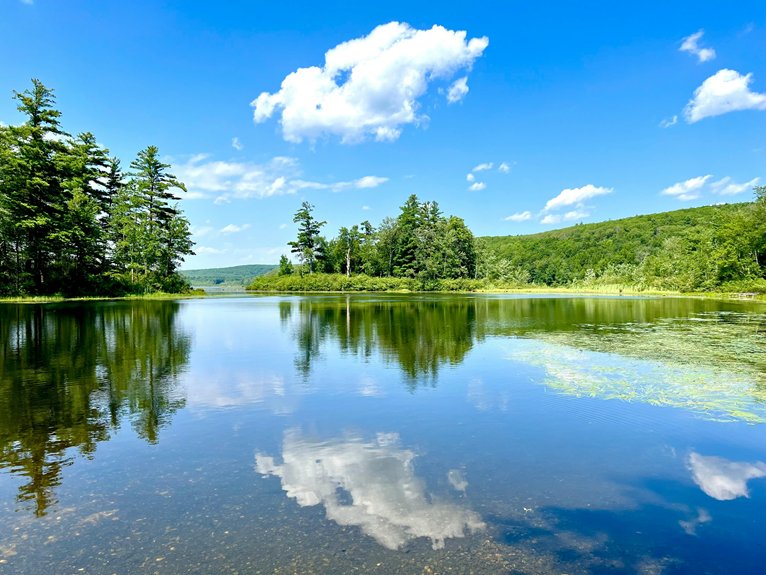
Sherwood Lake, MO, water levels and dissolved oxygen shape core ecosystem functions. Stage changes alter littoral habitat, shoreline erosion, sediment resuspension, nutrient transport, and water clarity. Low water can increase residence time and algal bloom risk. Oxygen depletion compresses fish habitat, weakens growth and reproduction, and can trigger fish kills, especially during warm, nutrient-rich periods. Together, these indicators reveal whether the lake is stable, stressed, or losing resilience. The patterns behind those shifts become clearer just ahead.
Because lake stage reflects the balance between hydrologic inputs and losses, water levels at Sherwood Lake, Missouri change primarily in response to precipitation, watershed runoff, groundwater exchange, evaporation, and any outlet-control or spillway conditions. Seasonal storm intensity, antecedent soil moisture, and basin topography govern inflow magnitude and timing, while summer heat and wind accelerate evaporative drawdown.
Groundwater connectivity can either stabilize stage or amplify declines, depending on hydraulic gradients. Impervious surfaces and shoreline alteration may increase flash runoff, reducing infiltration and complicating Water conservation planning.
From an ecological systems perspective, stage variability influences littoral habitat extent, sediment resuspension, nutrient transport, and wetland connectivity, creating measurable Ecological impacts. Continuous monitoring, remote sensing, and adaptive watershed management hence offer innovation-oriented pathways for forecasting variability and improving hydrologic resilience under changing climate conditions. Additionally, understanding lake water levels and their fluctuations is crucial for managing sediment resuspension and nutrient cycling, which directly affect water quality and aquatic habitats.
When dissolved oxygen declines in Sherwood Lake, Missouri, the most immediate changes occur in the lake’s metabolic balance, habitat suitability, and biogeochemical cycling. Reduced oxygen suppresses aerobic decomposition, increasing reliance on anaerobic pathways that release ammonia, methane, and soluble phosphorus from sediments.
As stratification intensifies with higher Water temperature, oxygen-poor bottom layers expand, narrowing functional habitat and altering nutrient processing efficiency. Primary productivity may shift toward bloom-forming algae adapted to unstable redox conditions, reducing water clarity and changing carbon flow through the food web.
These shifts can compress Aquatic biodiversity by favoring tolerant microbes, invertebrates, and plants over oxygen-sensitive assemblages. From a systems perspective, low oxygen operates as a lakewide stressor, restructuring ecosystem performance, accelerating internal nutrient loading, and weakening Sherwood Lake’s resilience to hydrologic and climatic variability over time.
As dissolved oxygen falls in Sherwood Lake, fish encounter an immediate physiological constraint: aerobic respiration becomes less efficient, reducing energy available for swimming, feeding, growth, and ion regulation. Metabolic scope narrows, forcing habitat compression into limited oxygen refuges and elevating crowding stress.
Rising water temperature intensifies this bottleneck by increasing oxygen demand while lowering oxygen solubility. Gill ventilation and heart rate increase, yet tissue delivery still declines, accelerating fatigue and impairing recovery after exertion. Juveniles often show reduced foraging efficiency, while larger individuals become vulnerable during diel oxygen minima.
Sensory performance and escape responses also deteriorate, shifting predator-prey dynamics in favor of aquatic predators. Under prolonged hypoxia, immune function weakens, reproduction falters, and sublethal stress can suppress recruitment even before visible fish kills occur across affected populations.
Water-level fluctuations at Sherwood Lake also regulate algal production and water clarity by altering residence time, light penetration, shoreline inundation, and nutrient availability. When levels decline, shallower margins warm faster, sediments resuspend more easily, and phosphorus previously bound in bottom deposits can reenter the water column. Those conditions elevate productivity and increase the probability of Algae blooms, especially during stable, high-temperature periods.
Conversely, moderate rises can dilute nutrient concentrations, yet newly flooded soils may briefly release organic matter and nitrogen, creating short-lived turbidity pulses. Water clarity thus reflects a dynamic balance among hydrology, sediment transport, and biological uptake.
Continuous level monitoring, paired with chlorophyll-a and turbidity sensors, offers a more predictive framework for identifying thresholds where optical quality shifts from resilient to impaired under seasonal forcing.
Low lake stages at Sherwood Lake impose immediate constraints on both boating access and fish habitat by reducing navigable depth, exposing submerged hazards, and compressing aquatic use into a smaller volume. As littoral zones contract, propeller disturbance resuspends sediments, reducing strike visibility and stressing forage communities.
Low stages at Sherwood Lake constrict navigation, expose hazards, and intensify habitat stress as shrinking littoral zones amplify sediment disturbance.
Boat ramps may lose operational depth, limiting launch windows and increasing congestion at remaining access points, with direct implications for Recreational safety. Anglers typically observe fish redistribution toward cooler, deeper pockets, where density-dependent competition can alter feeding efficiency and catch patterns.
From a management perspective, low water elevates the value of Water conservation and adaptive operations.
When Sherwood Lake departs from seasonal hydrologic and oxygen norms, imbalance is typically indicated by concurrent shifts in dissolved oxygen profiles, surface temperature structure, algal abundance, and fish distribution rather than by lake stage alone.
Persistent mid-depth oxygen depletion, elevated Water temperature, and compressed cool-water refuge often precede stress responses in sportfish and forage species. Additional indicators include repeated shoreline algal scums, increased turbidity after minor rainfall, and abrupt changes in benthic invertebrate presence, all suggesting altered nutrient cycling and weakened ecological resilience.
Wildlife habitat quality may also decline when littoral vegetation thins, amphibian use drops, or waterfowl concentrate in fewer oxygenated zones. In a systems view, these signals imply reduced habitat complexity, disrupted food-web efficiency, and diminished capacity to buffer short-term climatic and runoff variability under shifting watershed pressures.
Protection of Sherwood Lake, MO health depends on maintaining hydrologic stability, limiting external nutrient and sediment loading, and preserving dissolved oxygen conditions across depth and season. Effective protection integrates watershed management, real-time monitoring, and adaptive lake stewardship to sustain water quality and habitat preservation under variable climate and land-use pressure.
A preventive framework emphasizes continuous sensor data, stormwater controls, septic oversight, and low-impact development. These measures reduce algal bloom risk, protect benthic processes, and improve ecosystem performance over time.
Yes; drought-tolerant shoreline plants can improve Sherwood Lake, MO ecosystem stability by reducing erosion, moderating nutrient loading, and sustaining habitat complexity. Native grasses within shoreline buffers typically increase resilience, enhance infiltration, and support more stable biogeochemical cycling.
Nearby construction projects elevate Construction runoff, increasing sediment pollution in Sherwood Lake through exposed soils, altered drainage, and stormwater surges. Resulting turbidity reduces light penetration, disrupts benthic habitat, and accelerates nutrient transport, stressing aquatic ecosystem function.
Persistent, pervasive pressure: Invasive species likely affect Sherwood Lake MO water quality year-round, altering nutrient cycling, turbidity, and dissolved oxygen dynamics. Ecological monitoring indicates seasonal amplification, while technical mitigation requires continuous surveillance, rapid response, and adaptive management.
Underwater springs regulate Sherwood Lake conditions by moderating temperature, sustaining dissolved oxygen refugia, and stabilizing water chemistry. Their spring ecosystems and groundwater flow influence nutrient transport, habitat heterogeneity, and seasonal resilience, affecting biotic productivity and stress response.
Ironically, protecting Sherwood Lake starts on land: homeowners reduce Chemical runoff by precision-applying Lawn fertilizer, installing buffer strips, calibrating irrigation, and replacing impervious edges with native vegetation, thereby lowering nutrient loading, algal risk, and ecological disruption.
At Sherwood Lake, the same conditions that lower water levels—heat, limited inflow, and stronger evaporation—often coincide with declining dissolved oxygen, creating a compounded ecological stressor. This overlap is not incidental: reduced volume concentrates nutrients, accelerates algal growth, and increases fish vulnerability in stratified zones. When boating access, water clarity, and fish behavior shift at once, those signals point to linked physical and biological imbalance. Protecting lake health thus depends on tracking both hydrology and oxygen dynamics together. For more information on how Clean Flo can improve the health of your lake or pond, visit us online at Clean Flo. You can also check out our video series on our YouTube channel.