
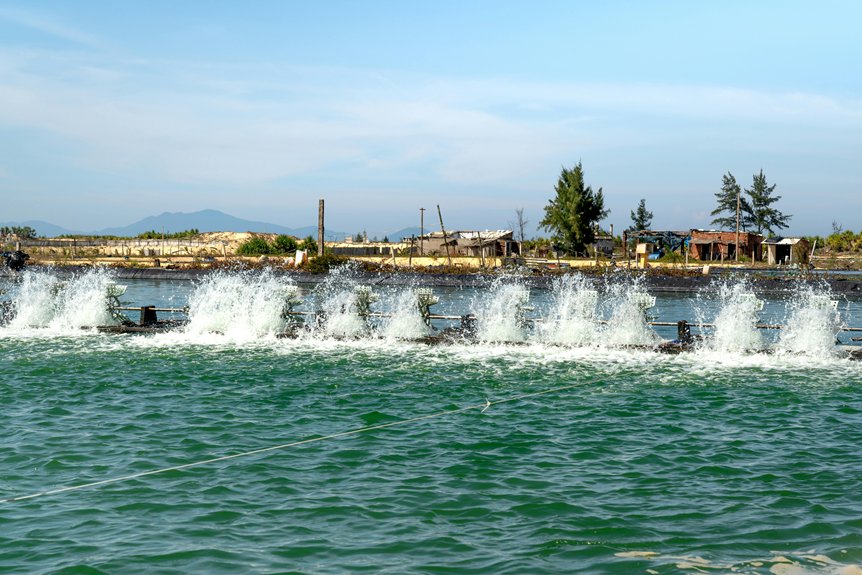
In North Carolina, ideal lake aeration systems are matched to depth, stratification, and nutrient-reduction targets. Shallow coastal and Piedmont ponds often benefit from fine-bubble diffused air grids and low-head surface circulators, while deep mountain reservoirs require destratification with deep diffusers or line-source bubblers. Proper sizing uses DO profiles, bathymetry, and NCDEQ nutrient strategies to curb internal phosphorus loading and algal blooms. Additional details explain system selection, costs, and compliance steps.
Although lakes across the United States share common limnological principles, North Carolina’s water bodies present a distinct mix of shallow coastal impoundments, Piedmont reservoirs, and deep mountain lakes that directly influences aeration system design and performance criteria.
North Carolina’s uniquely diverse lakes demand tailored aeration designs tuned to each basin’s physical and regulatory realities
Salinity gradients in coastal systems, fluctuating residence times in hydropeaking reservoirs, and strong thermal stratification in oligotrophic mountain lakes each alter oxygen-transfer efficiency and diffuser selection.
Engineers must align system performance with NCDEQ nutrient strategies in the Neuse, Tar-Pamlico, and Jordan and Falls Lake watersheds, while anticipating tighter total nitrogen and phosphorus targets.
Bathymetry, watershed land use, and residence time dictate whether fine-bubble diffusion, high-speed surface aeration, or destratification-focused mixing delivers the most cost-effective mg/L lift, energy footprint, and ecosystem resilience.
To protect long-term recreation and property value, North Carolina lake managers increasingly pair aeration with strategies that reduce eutrophication and hypoxia, helping restore natural water clarity and preserve the American lake lifestyle.
An effectively designed lake aeration system directly targets several high-priority water quality impairments that drive regulatory action and management costs.
In stratified North Carolina lakes, low dissolved oxygen (DO) in bottom waters accelerates internal phosphorus loading, fueling chlorophyll‑a exceedances and harmful algal blooms. Aeration elevates hypolimnetic DO, suppressing sediment nutrient release and reducing bloom risk.
Improved DO also stabilizes nitrification–denitrification pathways, lowering ammonia and nitrate concentrations linked to aquatic-life criteria.
By limiting anoxia, aeration curbs hydrogen sulfide generation, iron and manganese solubilization, and associated taste, odor, and discoloration issues in drinking-water reservoirs.
Additionally, aeration moderates extreme temperature gradients, supporting more resilient fish communities and reducing fish-kill events that trigger public concern, enforcement scrutiny, and expensive emergency response.
Selecting between surface, diffused, and fountain aeration requires matching system mechanics to specific water quality objectives, basin morphometry, and regulatory constraints.
Surface aerators deliver intense, localized oxygen transfer at the air–water interface, suiting smaller impoundments requiring rapid biochemical oxygen demand reduction or targeted fish‑kill prevention.
Diffused aeration, using compressor-fed bottom diffusers, promotes whole‑lake circulation and destratification, improving hypolimnetic oxygen and internal nutrient dynamics while limiting visual and noise impacts—often advantageous where buffer ordinances or aesthetic standards apply.
Fountain aeration provides moderate oxygenation with strong visual screening, relevant for publicly visible lakes subject to stakeholder scrutiny or light‑pollution guidelines.
Decision frameworks increasingly integrate dissolved oxygen time‑series, bathymetry, and permitted electrical/anchoring footprints to optimize configurations, and to document compliance with state water quality standards.
Coastal plain ponds, typically broad, shallow, and underlain by low‑permeability sediments, respond differently to aeration strategies than deeper stratified lakes. Making system choice less about destratification and more about managing chronic low dissolved oxygen, sediment oxygen demand, and nuisance algae.
In North Carolina’s coastal plain, field data show that fine‑bubble diffused air grids, operated at relatively low airflow but distributed across the basin, efficiently raise areal oxygen flux and suppress internal nutrient loading. Paired with low‑head, high‑volume surface circulators, these systems improve reaeration while limiting aerosol drift and noise—concerns for nearby residences and sensitive habitats.
Solar‑powered or hybrid compressors reduce wiring in saturated soils and align with stormwater program expectations for resilience. Emerging approaches integrate real‑time dissolved‑oxygen sensing, allowing adaptive aeration schedules that minimize energy use yet maintain aquatic‑life standards.
Although they often look like simple water features tucked between homes and roadways, Piedmont neighborhood lakes function as regulated stormwater controls where aeration choices must balance water‑quality standards, HOA aesthetics, and budget constraints.
Piedmont neighborhood lakes quietly work as stormwater infrastructure, demanding aeration that balances regulation, aesthetics, and cost
These basins typically show moderate depths, flashy inflows, and nutrient‑rich runoff, so systems must rapidly stabilize dissolved oxygen while limiting stratification and algal blooms.
Fine‑bubble diffused aeration from shore‑mounted compressors is frequently preferred because it circulates entire water columns with relatively low energy demand and minimal visual impact.
Configurations are often validated against NC stormwater design manuals and TMDL targets for chlorophyll‑a and nitrogen.
Hybrid layouts—pairing subsurface diffusers with discreet surface circulators at inlets—can intercept pollutant loads, reduce stagnation zones, and support more resilient benthic and littoral habitats.
Deep mountain reservoirs in the Piedmont–Blue Ridge shift zone demand aeration strategies that account for steep bathymetry, prolonged thermal stratification, and cold‑water habitat requirements for salmonids and sensitive native fishes.
Design begins with high‑resolution temperature–DO profiles, residence‑time estimates, and chlorophyll‑a and nutrient data to target hypolimnetic deficits without collapsing thermal structure.
Selective destratification using deep diffused air grids, line‑source bubblers along drowned river channels, and, in some cases, side‑stream oxygenation, allows managers to maintain a cold, oxygenated hypolimnion below 20 °C while meeting North Carolina water‑quality standards for minimum DO and chlorophyll.
Modeling tools (e.g., CE‑QUAL‑W2, DYRESM‑CAEDYM) help predict plume behavior, optimize diffuser depths, and document compliance for FERC relicensing and NPDES‑linked targets.
When North Carolina lake managers move from concept to implementation, cost, power demand, and long‑term maintenance often determine whether an aeration project remains viable beyond the first permit cycle. Capital budgets typically scale from a few thousand dollars for compact diffused air systems to six‑figure investments for multi‑basin installations.
Operating costs hinge on compressor efficiency (kWh/lb O₂ transferred) and utility tariffs, especially in Duke Energy and municipal service territories.
Preventive maintenance protects both ecosystems and compliance margins with NCDEQ standards by keeping dissolved oxygen delivery predictable.
Cost and maintenance planning only translate into reliable performance if a lake aeration system is correctly sized and installed for North Carolina’s climate, bathymetry, and regulatory context. Practitioners typically begin with a bathymetric survey, dissolved oxygen profiles, and seasonal temperature data.
Effective aeration starts with proper system sizing grounded in local bathymetry, oxygen data, and North Carolina’s regulatory realities
A common benchmark is 1–2 diffuser stations per acre for lakes deeper than 10 feet, adjusted using NCDEQ water-quality targets and nutrient-loading estimates.
Compressor capacity is then selected to deliver adequate CFM at depth while minimizing noise and energy use; variable-speed drives and smart controls support adaptive operation during stratification events and hurricanes.
Installation emphasizes diffuser placement in deepest basins, weighted airlines routed away from intake zones, anchored inlets, GFCI-protected power, and compliance with shoreline setbacks and dam-safety constraints.
Aeration can indirectly reduce mosquito populations by disrupting stagnant, low-oxygen zones favored for breeding. Data show improved circulation supports predator species (fish, dragonflies) and aligns with North Carolina IPM guidance, complementing larvicides, buffer vegetation, and regulatory-compliant habitat management strategies.
Like a precisely tuned engine, aeration stabilizes temperature and dissolved oxygen, improving bass and sunfish spawning success across NC ecoregions, while managers must align diffuser placement and runtime with state water-quality standards and habitat-conservation targets to avoid disturbing critical littoral zones.
Yes. Diffused-air, linear shoreline, and solar-powered systems can maintain dissolved oxygen while preserving littoral vegetation, nesting areas, and migratory corridors, provided designs respect waterfowl loafing zones, seasonal use patterns, and state–federal habitat, turbidity, and noise guidelines.
They must navigate NCDEQ water quality certifications, CAMA permits in coastal counties, potential 404/401 approvals, local stormwater ordinances, and HOA or lake-association rules, ensuring diffuser placement, noise, and power routing align with habitat protection and innovative design standards.
Solar and wind-powered aeration alone is not fully reliable during North Carolina hurricanes; innovators typically combine grid-tied or battery backup, storm-hardened moorings, submersible controls, and automated shutdowns to maintain dissolved oxygen targets while limiting equipment loss and ecological disruption.
In North Carolina, effective lake aeration is less a luxury and more a regulatory-informed necessity. When systems are properly sized to basin depth, nutrient loads, and stratification patterns, they can transform oxygen-starved “dead zones” into thriving habitats for fish and invertebrates. By carefully aligning diffuser layouts, power choices, and maintenance plans with state water-quality standards, lake managers can meet permit requirements while promoting resilient, climate-ready aquatic ecosystems across coastal plains, Piedmont lakes, and mountain reservoirs.
For more information on how Clean Flo can improve the health of your lake or pond, visit us online at Clean Flo. You can also check out our video series on our YouTube channel.