
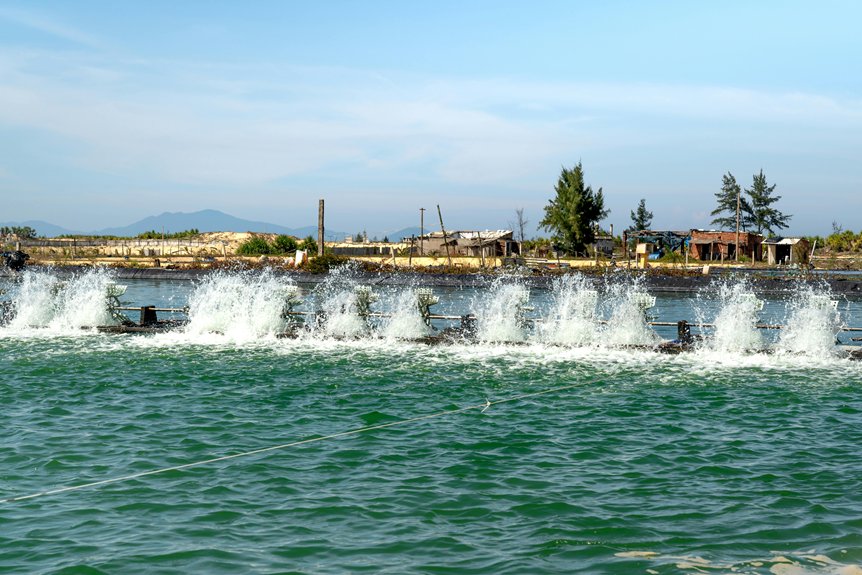
Lake aeration and restoration services in Fort Worth, TX apply engineered, regulation-aligned solutions to raise dissolved oxygen, break thermal stratification, and limit anoxic zones. Providers address nutrient enrichment, harmful algal blooms, and poor clarity using diffused aeration, phosphorus-binding treatments, bioaugmentation, and shoreline restoration, following TCEQ and EPA criteria. Systems are sized with bathymetry, nutrient budgets, sensors, and SCADA controls to optimize CAPEX/OPEX and support long-term compliance, which is explained in greater technical detail below.
How does systematic lake aeration transform the physical, chemical, and biological profile of Fort Worth’s surface waters? It operates as an engineered intervention that increases dissolved oxygen, disrupts thermal stratification, and optimizes nutrient cycling. By promoting vertical mixing, aeration stabilizes temperature gradients, limits anoxic zones, and supports predictable redox conditions in bottom sediments. From a water quality standpoint, these shifts reduce internal nutrient loading, improve clarity, and help maintain compliance with TCEQ and EPA ambient criteria. Aeration systems can be configured with real-time monitoring, enabling data-driven adjustment of airflow, diffuser layout, and runtime. This adaptive management supports ecosystem balance, sustaining native biota while discouraging opportunistic species, and aligns with performance-based lake management plans and watershed-based restoration strategies. In addition, lake aeration helps curb eutrophication and hypoxia, protecting long-term recreational use and property value around Fort Worth’s lakes.
Building on the role of aeration as a corrective tool, it is first necessary to define the recurrent impairments affecting North Texas lakes and their primary drivers. Regionally, the dominant issues include nutrient enrichment, low dissolved oxygen, nuisance aquatic plant proliferation, harmful algal blooms, and degraded water clarity.
Nonpoint-source phosphorus and nitrogen from urban stormwater, fertilized landscapes, and upstream agriculture accelerate eutrophication, as documented in TCEQ 303(d) listings. Elevated nutrients favor filamentous algae and invasive aquatic plant growth, impairing recreational and ecological use criteria.
Thermal stratification and organic loadings from leaf litter and sedimented solids further depress hypolimnetic oxygen.
Fine suspended sediments from watershed erosion reduce water clarity, limit submerged macrophyte diversity, and complicate compliance with site-specific water quality standards.
While lake impairments in North Texas are often multi-factorial, Fort Worth owners increasingly rely on integrated aeration and restoration services that directly target dissolved oxygen deficits, nutrient loads, and sediment-driven turbidity. Leading providers deploy basin-wide diagnostics, then design solutions that stabilize water quality metrics while supporting regulatory compliance for municipal, HOA, and industrial stakeholders.
Effective aeration and restoration programs in Fort Worth ultimately depend on selecting systems that match basin morphology, water-use designation, and regulatory constraints. Engineers first evaluate depth profiles, stratification frequency, and inflow loading to determine whether surface aerators, diffused air systems, or hybrid configurations will optimize dissolved oxygen for aquatic life.
Selection must align with Texas Commission on Environmental Quality (TCEQ) standards, municipal stormwater permits, and any drinking-water source protections. Data from baseline bathymetric surveys, Secchi depth readings for water clarity, and nutrient budgets guide diffuser spacing, compressor sizing, and run-time algorithms.
Innovative systems now integrate real-time dissolved oxygen sensors, SCADA controls, and variable-frequency drives, enabling adaptive operation that supports habitat quality while minimizing regulatory risk and energy consumption.
A thorough cost and maintenance strategy for Fort Worth lakes must account for capital investment, routine operation, and long-term asset renewal under Texas regulatory constraints. Financial planning typically integrates CAPEX for aeration equipment, OPEX for power and labor, and reserve funds for diffuser replacement, dredging, and SCADA upgrades.
Lifecycle costing models quantify Environmental impact alongside performance metrics such as dissolved oxygen, HAB reduction, and nutrient load.
Lake aeration progressively elevates Fish oxygenation, reducing hypoxia incidents and altering fish depth-distribution patterns; concurrently, it stabilizes trophic dynamics, enhances benthic invertebrate productivity, and modernizes Wildlife habitat conditions consistent with adaptive management, TMDL objectives, and long-term ecological performance standards.
Fort Worth frequently requires permits; permitting requirements pivot on pond size, discharge pathways, and electrical connections. Innovators must guarantee regulatory compliance with city stormwater codes, TCEQ water-quality standards, and possible USACE reviews before designing, installing, or operating advanced aeration systems.
Yes. Aeration disrupts stagnant surface films, reducing mosquito breeding habitat and larval survival, thereby contributing to measurable health risk reduction for vector-borne diseases, especially when integrated with larvicide programs, biological controls, and documented in site-specific monitoring plans.
Seasonal temperature fluctuations and precipitation variability most affect Fort Worth lake health, driving stratification, hypoxia, and nutrient release; regulators and innovators prioritize adaptive aeration regimes during hot, stagnant summers and post-storm inflow pulses, when systems behave like biochemical pressure cookers.
Aeration typically improves irrigation and livestock suitability by stabilizing water quality, enhancing dissolved oxygen, and supporting algae control; however, managers must monitor turbidity, nutrient mobilization, and pump‑intake placement to guarantee compliance with state water and livestock‑use standards.
In Fort Worth, properly engineered aeration and restoration services function like a circulatory system for lakes, moving oxygen and nutrients with measurable efficiency. When solutions are selected using site-specific data—such as bathymetry, dissolved oxygen profiles, and nutrient loading—and aligned with TCEQ, EPA, and local stormwater requirements, owners can reduce algal blooms, stabilize shorelines, and protect aquatic life. Ongoing monitoring, scheduled maintenance, and documented performance benchmarks ensure long-term regulatory compliance and asset preservation. For more information on how Clean Flo can improve the health of your lake or pond, visit us online at Clean Flo. You can also check out our video series on our YouTube channel.